
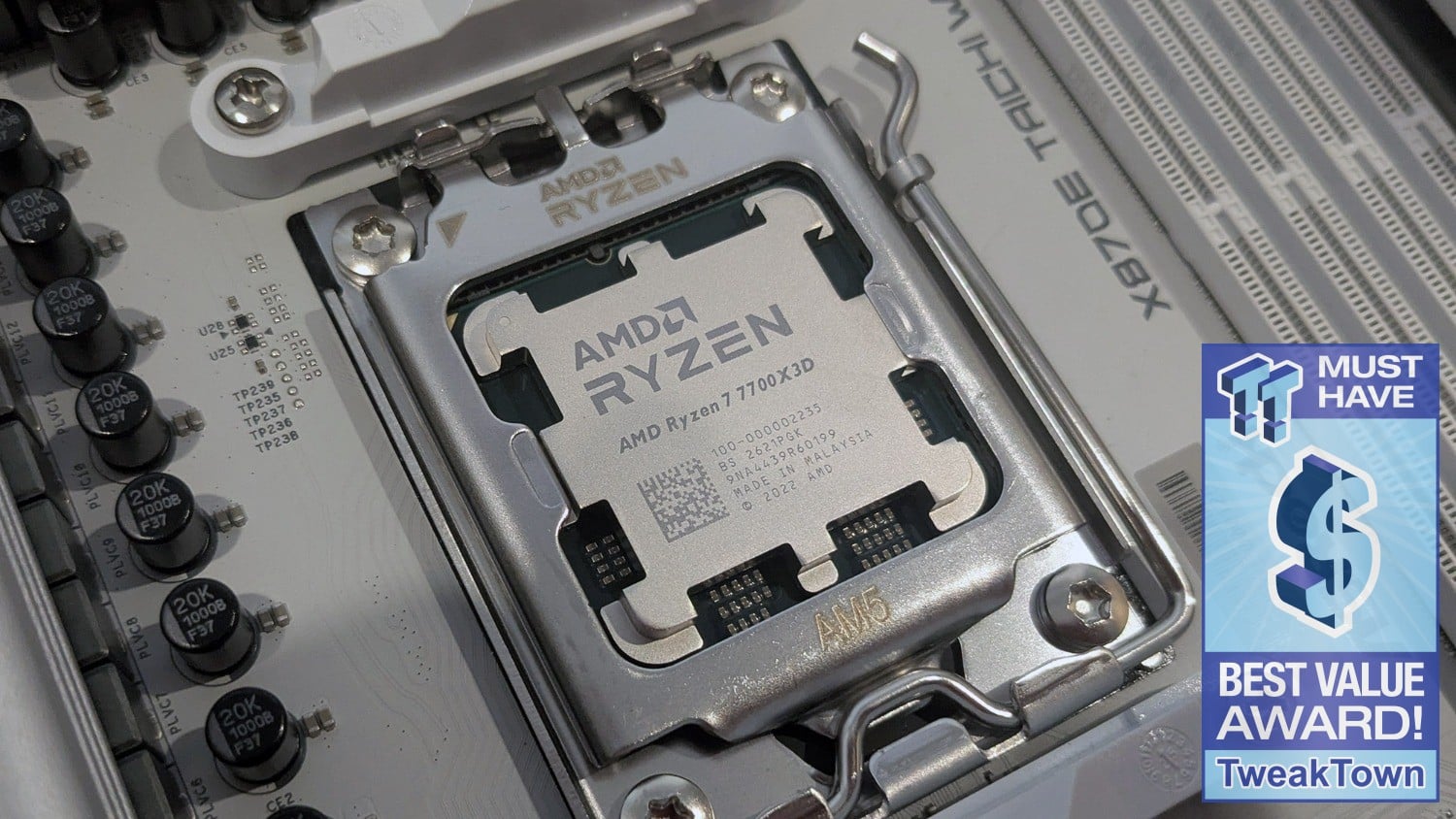
AMD has expanded its Zen 4 processor lineup with the release of the Ryzen 7 7700X3D, a chip that brings 3D V-Cache technology to a lower price point within the Socket AM5 ecosystem. The processor features eight cores and 16 threads, utilizing the same 96 MB of L3 cache found in its predecessor, the Ryzen 7 7800X3D. However, the new model arrives with reduced clock speeds, featuring a 4.0 GHz base clock and a 4.5 GHz boost clock, representing a 5% and 10% reduction respectively compared to the 7800X3D.
Performance testing indicates that the Ryzen 7 7700X3D functions as a slightly downclocked variant of the 7800X3D. In synthetic benchmarks like Cinebench 2026, the processor performs as expected for an eight-core chip with lower frequencies, trailing the 7800X3D in both all-core and single-core workloads. TechSpot reported that the 7800X3D was 7% faster in all-core tests and 11% faster in single-core frequency measurements, with the 7700X3D operating at slightly lower temperatures and power draw under load.
In gaming scenarios, the 7700X3D remains competitive, particularly at lower resolutions where CPU performance is more critical. Benchmarks across titles such as Rainbow Six Siege, Marvel Rivals, and Horizon Zero Dawn Remastered show the chip trailing the 7800X3D by margins typically ranging from 3% to 10%, depending on the visual settings and the degree of GPU bottlenecking. While it consistently outperforms older architectures like the Ryzen 7 5800X3D, its performance relative to other modern chips varies based on the specific game engine.
The primary point of contention among reviewers is the product's pricing strategy. Initially launched with an MSRP of $329, the 7700X3D faced criticism for being priced too close to the more powerful 7800X3D. Some retailers, such as Newegg, have already applied discounts, bringing the price down to $279. Analysts note that while the chip provides an entry point into the AM5 platform with a clear upgrade path to future Zen 6 and Zen 7 architectures, the high cost of required DDR5 memory can offset the savings gained from the lower CPU price.
Ultimately, the Ryzen 7 7700X3D is viewed as a niche product for builders prioritizing the AM5 upgrade path over maximum out-of-the-box performance. Reviewers suggest that the value of the chip is entirely contingent on its street price relative to the 7800X3D. Without significant price separation, the 7700X3D struggles to justify its existence as a standalone purchase for those who could otherwise acquire the faster, more mature 7800X3D model.