
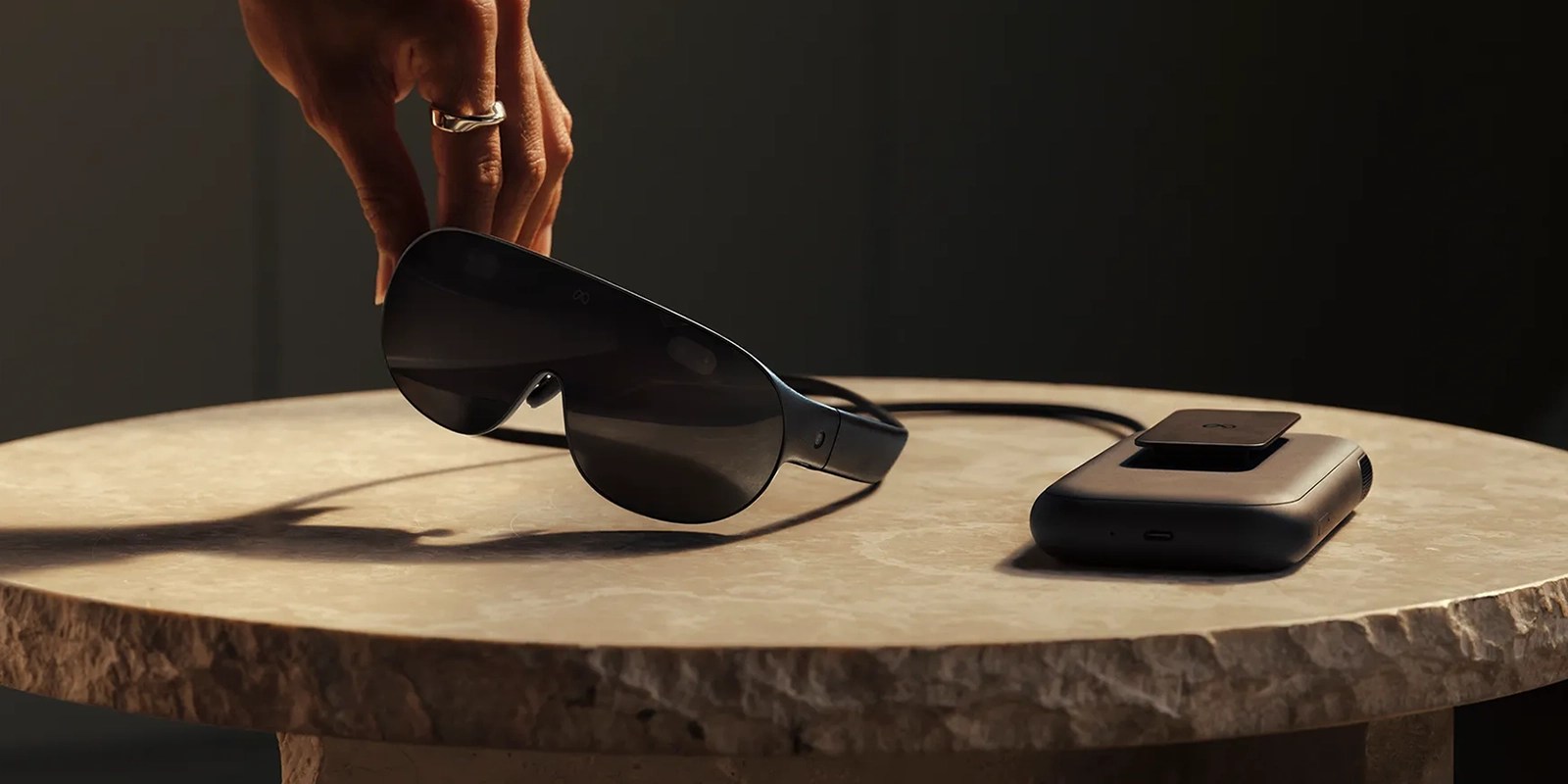
Meta has unveiled its upcoming Meta VR Glasses, a new mixed reality device designed to offer a more compact alternative to traditional all-in-one headsets. Scheduled for a spring 2027 release with a retail price of $1,300, the hardware shifts the primary processing, battery, and storage components into a separate, pocketable compute puck. This design allows the glasses themselves to weigh approximately 100g, significantly lighter than the 515g Meta Quest 3.
The device features what Meta describes as a 5K Infinite Display, utilizing micro-OLED panels with a resolution of 2,412 by 2,288 pixels per eye. It offers a pixel density of 37 pixels per degree (PPD) across an 88-degree diagonal field of view. The compute puck is powered by Qualcomm’s Snapdragon Reality Elite processor, paired with 12GB of RAM and 128GB of internal storage, which can be expanded up to 1TB via a microSD card slot.
Navigation on the Meta VR Glasses relies primarily on eye-tracking and hand gestures rather than physical controllers. Users can select items by looking at them and pinching their fingers, or scroll by moving their thumb. The system includes six external cameras to track hand movements, though the device remains compatible with existing Meta Touch Plus controllers for users who prefer them. For productivity, the glasses support a virtual keyboard and trackpad that appear when hands are placed on a flat surface.
The platform is designed to support the existing library of Quest games and applications, with Meta promising over 75 titles optimized for hand-tracking at launch. Entertainment features include support for Dolby Vision, Dolby Atmos, and IMAX Enhanced content, with partnerships established for 3D streaming through services like Disney+. The device also supports wireless multi-screen mirroring from PCs and Macs, as well as wired connections via USB-C.
Meta plans to offer the glasses in two distinct sizes, Standard and Large, to accommodate different head widths. The included compute puck houses a battery rated for approximately three hours of media playback and supports 45W fast charging, allowing the device to remain operational while plugged into a power source. The glasses also feature manual interpupillary distance (IPD) adjustment and support for prescription inserts from Zenni Optical.